
If the real estate market feels confusing right now, you’re not alone. Headlines swing between “the market is crashing” and “now is the perfect time,” which leaves most people unsure of what to believe.
Instead of opinions, let’s look at the data. The following insights are based on nationwide statistics from the National Association of Realtors (NAR) with industry analysis from Brian Buffini’s annual market predictions, which I review each year to stay grounded in long-term housing trends.
2021 Was the Exception, Not the Rule
The past few years have distorted expectations for both buyers and sellers. The 2021 market was a once-in-a-generation environment driven by ultra-low rates, limited inventory, and intense demand. That combination created bidding wars and record-setting speed.
That market is not coming back. And that’s not bad news.
What we’re seeing now is a normalization.
Inventory Is Rising — and That’s Healthy
(NAR Nationwide Data)
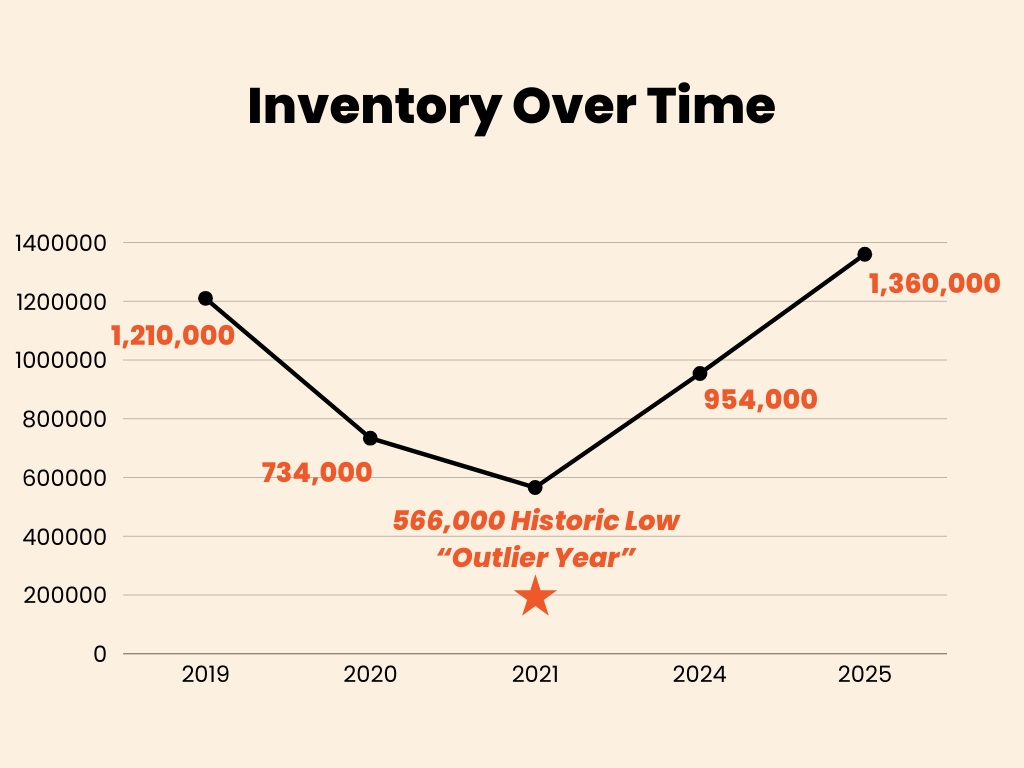
National housing inventory tells an important story:
2019: 1.21 million homes
2020: 734,000
2021: 566,000 (historic low)
2024: 954,000
2025: 1.36 million
Rising inventory means buyers have more options and sellers must be more intentional. This is what a functional market looks like.
Months of Supply Is Moving Toward Balance
(NAR Nationwide Data)
Months of supply measures how long it would take to sell all available homes at the current pace.
2021: 2.6 months (extreme seller’s market)
2024: 4.1 months
2025: 4.7 months
A balanced market is typically around six months of supply. We’re not there yet, but we’re moving closer.

Homes Are Taking Longer to Sell — Strategy Matters
(NAR Nationwide Data)
2019: 36 days
2020–2022: ~21 days
2024: 29 days
2025: 34 days
Homes are still selling, but pricing, presentation, and marketing matter more than they did a few years ago.
Home Prices Have Stabilized
(NAR Nationwide Median Prices)
2019: $312,000
2022–2025: approximately $425,000
Despite higher rates, prices have largely plateaued rather than declined. Stability creates opportunity and clarity for both buyers and sellers.
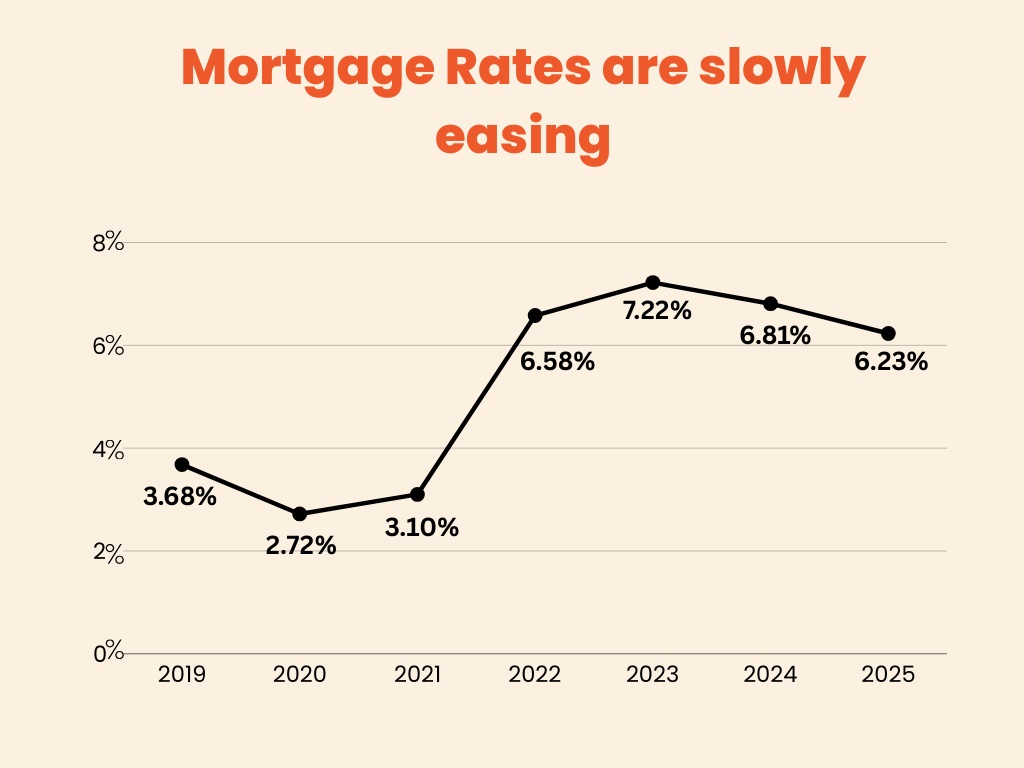
Mortgage Rates Are Slowly Easing
(National Averages)
2023: 7.22%
2024: 6.81%
2025: 6.23%
If rates move from 6.8% to 5.8%, an estimated 5.5 million additional households could qualify to buy a home, including 1.6 million renters. Small shifts have big ripple effects.
A New Seller Is Emerging
According to national trends, the median seller age is now projected to be 64. These are long-term homeowners with significant equity who are ready for their next chapter.
Many are downsizing, relocating closer to children and grandchildren, and often helping the next generation with down payments. This generational transfer of equity is becoming one of the most important forces in today’s market.

First-Time Buyers: Don’t Give Up
The median age of a first-time homebuyer has steadily increased:
2019–2021: 33
2022: 36
2023: 35
2024: 38
2025: 40
Affordability challenges are real, but homeownership remains one of the strongest tools for long-term wealth building. The path may look different, but the opportunity still exists.
Hope matters in this market.
A Final Reality Check for Sellers
(NAR Nationwide Listing Data)
In 2025, 1 out of every 7 listings nationwide was withdrawn. Many of these sellers are waiting for conditions similar to 2021.
Think of 2021 like winning the lottery. You don’t expect to win it every year after that.
Successful sellers today are adjusting expectations, pricing correctly, and leaning into strategy instead of waiting on an artificial market to return.
What This Means for You
These statistics are national in scope, and every local market behaves differently. That’s why context matters.
The big takeaway: the market isn’t broken. It’s evolving. Understanding the data allows you to make confident, informed decisions instead of emotional ones.
If you’d like to talk through what these national trends mean specifically for our local market and your situation, I’m always happy to help.